
Ask five riggers what it costs to move a CNC machine across state lines and you will get five different numbers. That is not a sales trick, it is because the cost is driven by a handful of specific variables, and small changes in any one of them can swing a quote by thousands of dollars. Before you build a moving budget, it helps to know exactly what you are paying for.
This post picks up where our guide on deciding what to sell versus what to move leaves off. Once you know which machines are making the trip, this is what it actually costs to get them there.
Why Rigging Quotes Vary So Much
Two shops moving similar equipment the same distance can get quotes thousands of dollars apart, and it usually comes down to a few factors that are not obvious until you are already comparing bids. Weight and footprint drive crew size and equipment needs. Distance drives fuel, permits, and travel time. Whether a machine needs to be partially disassembled before it can be crated adds skilled labor hours on both ends of the trip. Access at either location, tight doorways, stairs, no loading dock, can turn a straightforward job into a specialty one.
Want a real number for what you're moving?
A free valuation tells you what each machine is worth, so you can weigh that against the rigging quote before you commit.
Get My Free Equipment Valuation →What Shop Owners Actually Report Paying
1. A single mid-size machine, regional distance
For a machine in the 3,000 to 10,000 pound range moved somewhere in the range of 50 to 200 miles, shop owners commonly report quotes somewhere between a few hundred dollars and roughly $3,000, depending on crew size, whether a forklift or crane is needed, and local access conditions.
2. A larger or heavier machine, longer distance
Once you are into machines in the 10,000 pound and up range, or distances in the 500 to 750 mile range, quotes commonly land somewhere between $3,000 and $6,000 per machine, sometimes more depending on disassembly needs and permitting.
3. A full shop, moved as one job
Moving an entire equipment lineup at once, even a fairly short distance, can run into five figures once multiple trucks, crews, and multiple trips are involved. Shop owners moving a mixed lineup of CNC lathes, mills, and specialty equipment even a few miles have reported totals in the $10,000 to $15,000 range for the whole job.
4. True interstate or cross-country relocation
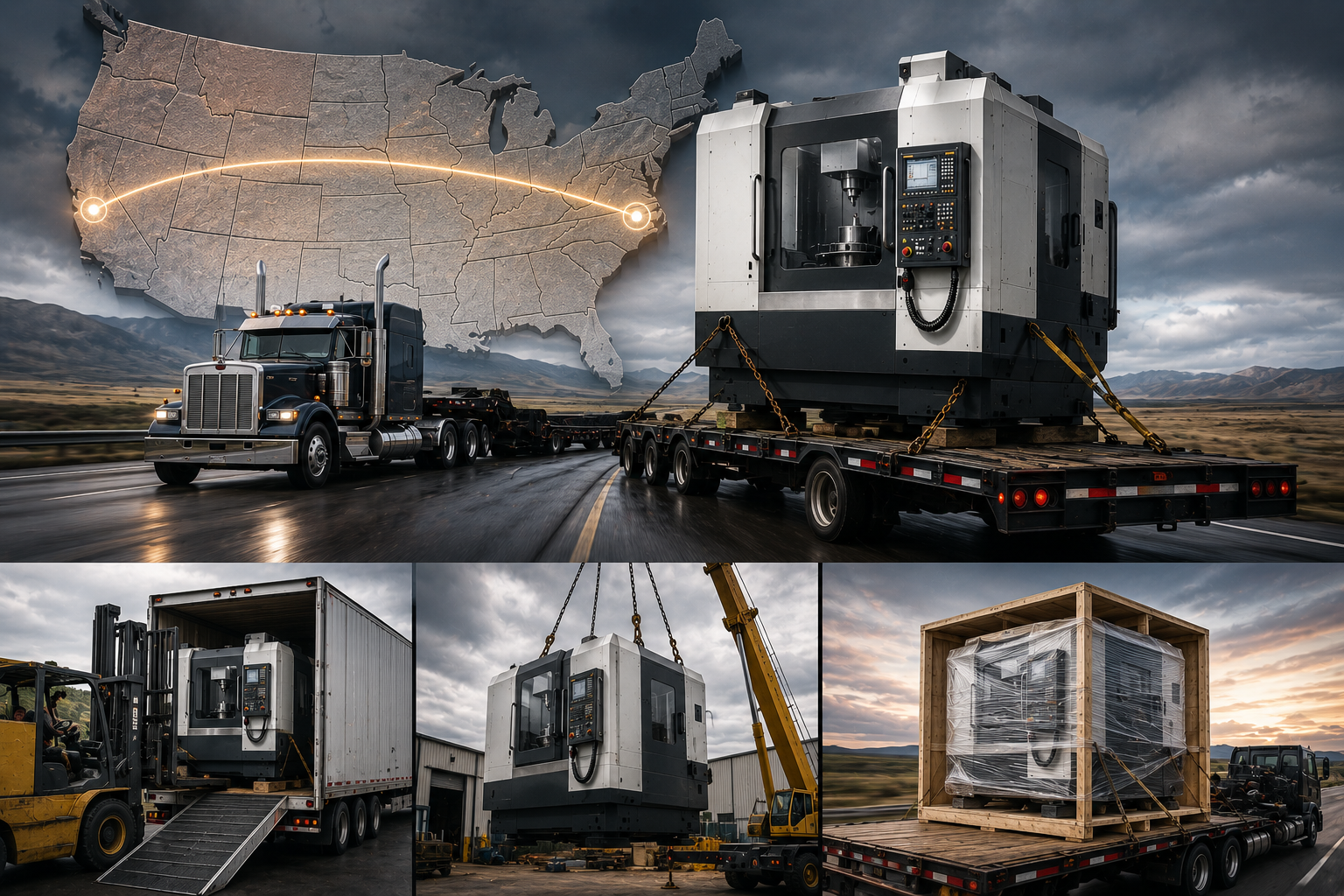
Full shop relocations across state lines, especially longer distances, are commonly quoted in the $15,000 to $50,000 or more range by industrial rigging providers, once insurance, permits, disassembly, and reinstallation are factored in on top of the base transport cost.
Comparing the Cost Against What the Machine Is Worth
The rigging cost only tells half the story. The number that actually matters is how that cost compares to what the machine is worth on the resale market right now. A $3,000 rigging bill is an easy call on a machine worth $80,000. It is a much harder call on a machine that would sell for $4,000. Valuation comes down to a few concrete factors:
- Brand and model. Haas, Mazak, Okuma, and DMG Mori hold value very differently than lesser known import brands.
- Control vintage. A machine on a current generation control is worth meaningfully more than the same mechanical machine on a control that's two or three generations behind.
- Condition and hours of usage. Spindle hours, way wear, and maintenance history all move the number.
- Tooling and accessories included. Tombstones, vises, tool holders, and probing packages can add real dollars to a sale.
Run this comparison on every machine before you finalize a moving budget, not just the expensive ones. It is often the mid-value machines where the math is closest, and where a real valuation actually changes the decision.
Building an Accurate Moving Budget
Get itemized quotes, not a single lump sum
Ask riggers to break out labor, transport, disassembly, and permits separately so you can see where the money is actually going.
Get at least three bids per machine or per job
Shop owners consistently report wide swings between bids for the same job, so one quote alone is not enough to budget against.
Confirm what insurance actually covers
Ask specifically what happens if a machine is damaged in transit, and whether that coverage is included or an add-on.
Add a buffer for re-leveling and re-calibration
Budget both time and cost for getting the machine back to spec after it arrives, not just the transport itself.
FAQ
Why did I get quotes thousands of dollars apart for the same move?
Usually access conditions, disassembly requirements, or how a rigger is pricing crew time. Ask for an itemized breakdown so you can compare bids on the same basis.
Is it cheaper to hire one rigger for the whole shop instead of machine by machine?
Often, yes, since a single job with one crew and fewer total trips usually beats paying separately for each machine, though it is worth getting both types of quotes to compare.
Does insurance typically cover damage during an interstate move?
It depends on the rigger and the policy. Always confirm coverage in writing before the machine leaves your floor, rather than assuming it is included.
At what point does it make more sense to sell a machine than pay to move it?
When the rigging cost starts to approach a meaningful share of what the machine would actually sell for. A real valuation is the only way to know that number instead of guessing.
Know what your equipment is worth before you commit to a moving budget
A free valuation gives you the number to weigh against every rigging quote you get.
Start My Free Valuation →