
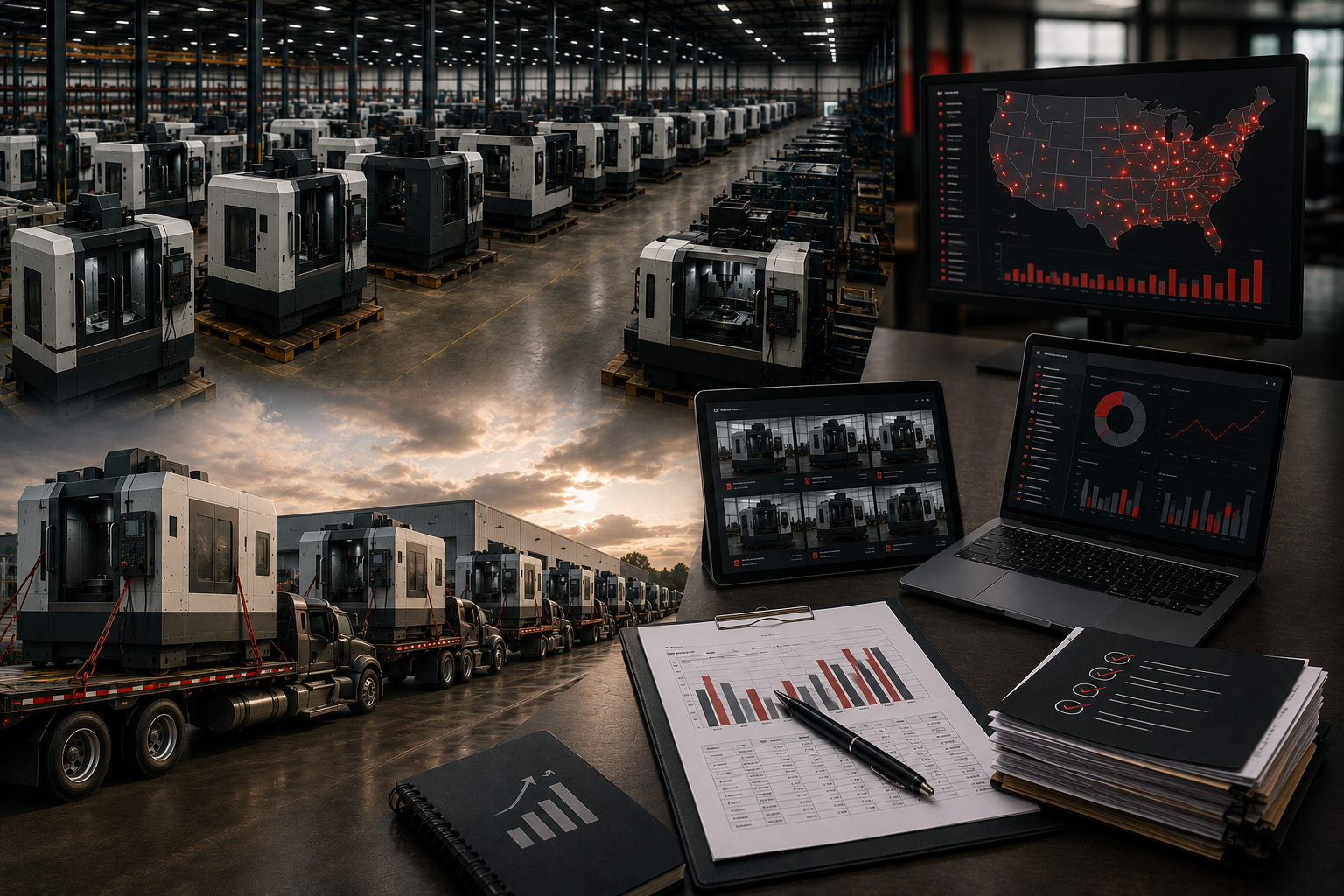
A single machine tool repossession and a portfolio of forty are not the same problem scaled up, they're genuinely different challenges. Volume introduces risks that don't show up in a one-off disposition, flooding a limited buyer pool, inconsistent documentation across dozens of files, and losing visibility into where everything actually stands. A large repossession event, a branch consolidation, a big borrower's closure, a portfolio wind-down, needs its own approach.
Why Volume Changes the Math
Machine tool buyers are a real but finite pool for any given equipment type. Releasing too many similar machines onto the market at once can depress the price each one commands, working against the exact recovery the institution needs. As covered in our guide on liquidating collateral without tanking portfolio value, this concern applies even more directly at volume, where the risk isn't just one appraisal mark, it's the actual sale price on every unit still waiting to sell.
Volume also multiplies the operational burden. Forty machines means forty condition reports, forty valuations, forty disposition files, all needing to stay consistent and organized. A process that works fine for one machine can quietly break down at scale without a system built for it.
Facing a large repossession portfolio?
A disposition program built for volume, not forty one-off transactions handled separately.
Talk to a Remarketing Partner →How to Handle Volume Without Losing Value
1. Stagger the market release
Rather than listing everything simultaneously, releasing equipment in planned waves protects the price each machine commands by avoiding an oversupply of similar machines hitting the same buyer pool at once.
2. Standardize intake and documentation across every unit
The same condition report format, the same valuation methodology, applied consistently across every machine, keeps the portfolio's disposition files uniform and defensible rather than a patchwork of different approaches.
3. Centralize reporting and visibility
At volume, the institution needs a single, current view of where every machine stands, valued, marketing, under offer, sold, rather than tracking dozens of individual dispositions separately.
4. Sequence by equipment type and buyer overlap
Machines that would compete for the same buyer pool benefit from staggered release, while machines serving different buyer segments can often move in parallel without one undercutting the other.
What a Coordinated Approach Protects
- Per-unit recovery, protected by staggered release rather than market saturation.
- File consistency, every disposition documented the same defensible way.
- Institutional visibility, one clear picture of portfolio status instead of scattered individual updates.
- Timeline predictability, a planned release schedule instead of reactive, one-off handling.
Running a Portfolio-Scale Disposition
Inventory and triage
Catalog the full portfolio and group machines by type, value, and likely buyer overlap.
Build the release plan
Sequence which machines go to market first and which wait, based on buyer pool overlap and market conditions.
Standardize documentation
Apply the same condition report and valuation methodology across every unit from the start.
Track centrally as the program runs
One consolidated view of status across the whole portfolio, updated as each unit moves through the process.
FAQ
How many machines counts as a portfolio needing this approach?
There's no fixed number, but once a repossession event involves enough similar machines that they'd compete for the same buyer pool, staggered release starts to matter.
Does staggering release slow down total recovery time?
It can extend the full portfolio timeline somewhat, but the goal is protecting per-unit price, which often outweighs the value of moving everything simultaneously at a depressed price.
How is documentation kept consistent across many units at once?
A standardized template and process applied to every machine from intake forward, rather than handling each disposition as its own separate process.
What's the biggest risk institutions underestimate at volume?
Market saturation. It's easy to assume more machines just means more sales, but flooding a limited buyer pool can depress the price on every unit in that release.
Have a large portfolio that needs a coordinated plan?
A disposition program built to protect per-unit value at scale.
Talk to a Remarketing Partner →