
Machine tool collateral is different from most of what crosses a special assets desk. It's specialized, it's not easy to value without category specific knowledge, and it requires actual rigging and transport to move, not just a signature and a listing. This guide walks through the full disposition process for CNC and machine tool collateral specifically, with links to a deeper dive on each stage.
Why Machine Tool Collateral Needs Its Own Playbook
A lot of standard collateral disposition knowledge, real estate, vehicles, general business assets, doesn't transfer cleanly to CNC equipment. Valuation depends on brand, model, and control vintage in ways a generalist wouldn't know to ask about. Marketing has to reach a specific, somewhat niche buyer pool. And the physical logistics, rigging, transport, reinstallation, are a real part of the process, not an afterthought. Treating machine tool collateral like any other asset tends to produce weaker recovery and thinner disposition files.
Handling a machine tool repossession right now?
Direct line to over a decade of experience in exactly this collateral category, nationwide.
Talk to a Remarketing Partner →The Process, Stage by Stage
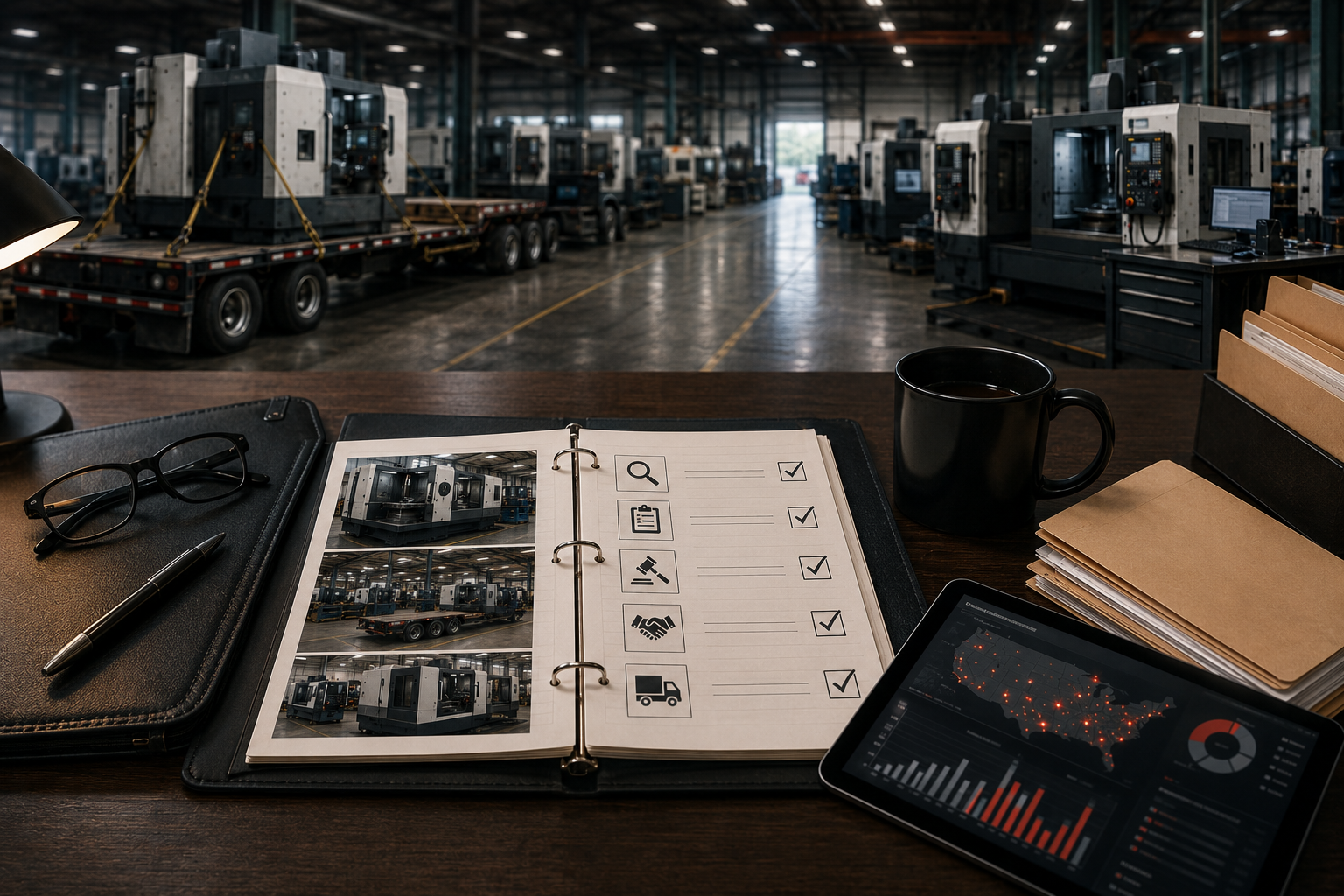
1. Research and valuation
Everything downstream depends on getting an accurate, documented valuation early, one that reflects the actual make, model, control vintage, and condition, not a generic estimate. This is also the point to start thinking about who's going to handle the disposition, since a category specific partner can often supply this valuation directly.
2. Documentation and file building
Collateral records, condition reports, photographs, and the valuation itself all need to go into the file starting now, not reconstructed later. Our guide on disposition file documentation covers exactly what a complete file needs.
3. Commercially reasonable sale
The disposition itself has to meet the UCC Article 9 standard, method, marketing, timing, and terms all have to be defensible. Our guide on commercially reasonable sales covers what that actually requires in practice for this equipment category.
4. Vendor selection and negotiation
Whether handling this in-house or through a partner, as covered in our comparison of in-house auction versus a remarketing partner, the buyer network and negotiation process directly affect recovery. A new vendor relationship should also clear your institution's TPRM review before the first machine is assigned.
5. Logistics, transport, and closing
Rigging and transport arranged in advance rather than scrambled together after a sale agreement keeps this stage from becoming a bottleneck. Once the sale closes, settlement records and the final deficiency balance calculation, if applicable, complete the file.
What's at Stake at Each Stage
- Recovery, driven mainly by valuation accuracy and buyer reach.
- Defensibility, driven by documentation and adherence to the commercially reasonable standard.
- Speed, since, as covered in our guide on remarketing speed and loss severity, delay works against recovery on multiple fronts at once.
- Vendor risk, managed through proper TPRM review and choosing a partner with real category specific experience.
The Process End to End
Repossession and initial documentation
Condition, photographs, and collateral records captured immediately.
Valuation and vendor assignment
An accurate valuation and, if using a partner, a vendor who's already cleared TPRM review.
Marketing and buyer outreach
Targeted exposure to qualified buyers in the machine tool category.
Negotiation and sale
A documented, commercially reasonable process from offer through executed agreement.
Logistics and closing
Rigging, transport, settlement, and a completed disposition file.
FAQ
Is machine tool collateral really that different from other equipment types?
Meaningfully, yes. Valuation depends on category specific knowledge, the buyer pool is more specialized, and physical logistics play a bigger role than with most other collateral types.
Should this whole process be handled in-house?
It depends on volume and internal expertise. Many institutions use a specialized partner specifically because of the category specific knowledge and buyer network required.
What's the single most common mistake in this process?
Delay between repossession and assignment to whoever's going to handle valuation and marketing. It's the largest avoidable source of lost time and recovery.
Where should someone new to this collateral type start?
With an accurate valuation and a documented condition report at repossession. Everything else in the process builds from that foundation.
Have a machine tool disposition in front of you right now?
Direct line to over a decade of experience in this exact collateral category, nationwide.
Talk to a Remarketing Partner →