Choosing who handles a repossessed CNC machine isn't just a vendor decision, it directly affects recovery, how defensible the file is, and how much internal work the disposition creates. A generalist auction house that handles everything from office furniture to construction equipment is not the same as a partner who specifically understands machine tool collateral. Here's what actually separates the two.
Why the Vendor Choice Matters as Much as the Sale Itself
As covered in our guide on commercially reasonable dispositions, courts expect targeted outreach to buyers who actually understand the equipment, not just general exposure. A vendor without a real buyer network in the CNC and machine tool space is going to struggle to meet that bar, no matter how well intentioned the process is.
It also affects internal workload. A vendor who understands the documentation a disposition file needs will produce it as a normal part of the process. One who doesn't will leave that work to your team to reconstruct after the fact.
Vetting a new remarketing partner?
Over a decade in CNC and machine tool disposition specifically, not general asset liquidation.
See the Background →What to Actually Look For
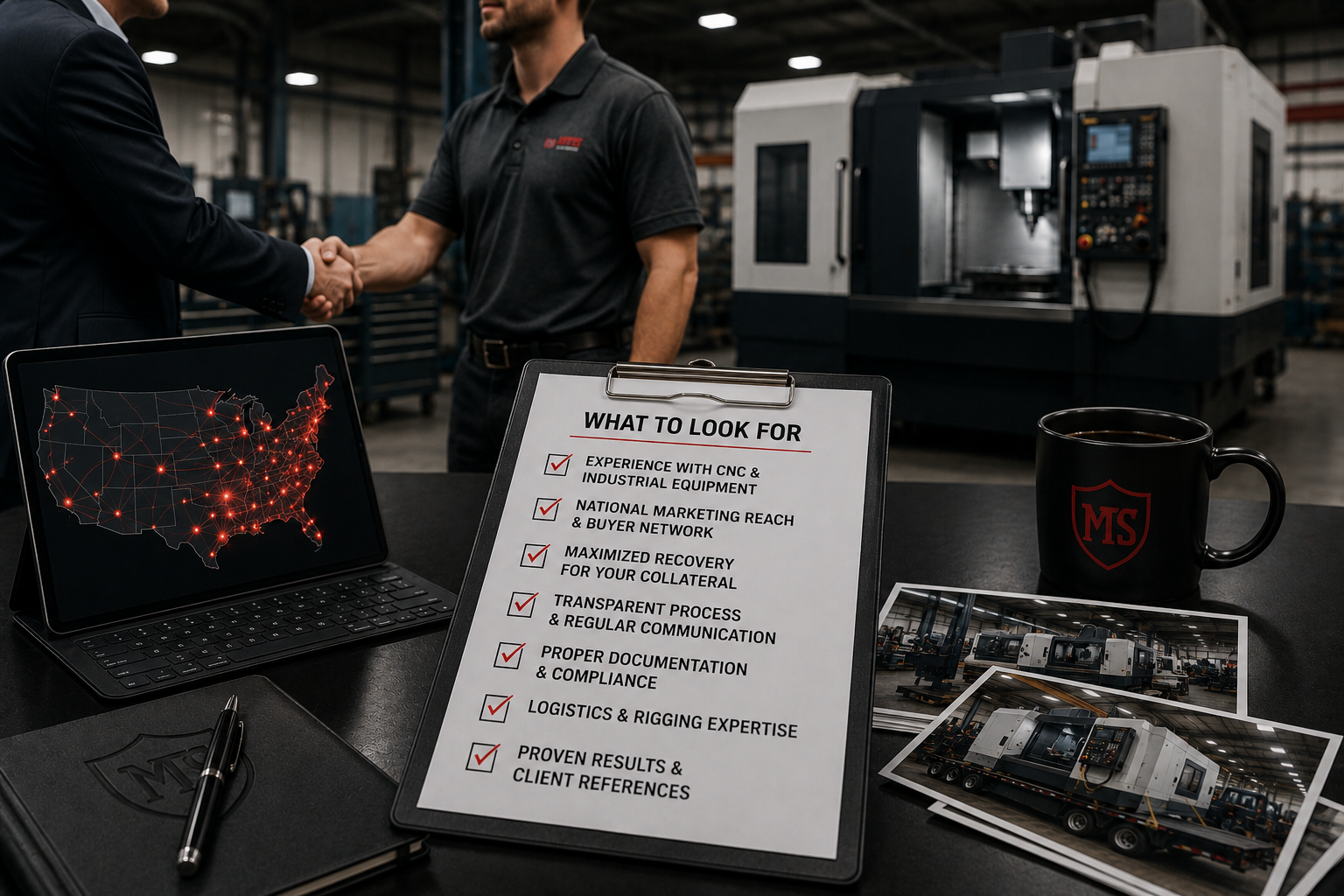
1. Real experience with CNC and industrial equipment specifically
Not general asset liquidation experience, direct, hands-on familiarity with machine tools, brands, control systems, and what actually drives value in this category. A vendor who can't speak specifically to the difference between a Haas and an Okuma, or explain how control vintage affects resale value, is going to under-market the equipment.
2. National marketing reach and an actual buyer network
Machine tool buyers are a specific, somewhat niche pool, job shops, contract manufacturers, other dealers, and they're not evenly distributed geographically. A partner with a genuinely national network can reach the right buyer regardless of where the equipment sits, rather than being limited to local or regional exposure.
3. A track record aimed at maximizing recovery, not just moving equipment fast
Speed matters, but a partner whose only lever is a quick sale at whatever price the first offer brings isn't serving the institution's recovery. Look for a process that's built to find the best real buyer, not just close the file.
4. A transparent process with regular communication
You should know where a disposition stands without having to chase status updates. A partner who communicates proactively is also one whose documentation tends to be in better shape when the file needs it.
5. Proper documentation and compliance awareness
As covered in our guide on disposition file documentation, a strong file needs collateral records, valuation, marketing evidence, and settlement documentation. A vendor who understands why that matters, not just what to sell it for, produces a materially stronger file.
6. Logistics and rigging expertise
Moving a CNC machine involves rigging, transport, and often disassembly and reinstallation. A partner who understands this side of the process, not just the sale, prevents costly surprises and keeps the equipment in sellable condition throughout.
7. Proven results and references
Ask directly. A partner with real experience in this niche should be able to point to a track record, volume handled, and institutions they've worked with before.
What a Good Fit Actually Protects
Choosing the right partner protects more than the sale price. It protects:
- Recovery, a genuinely national buyer network in the right category tends to produce stronger offers than local or generic exposure.
- The disposition file, documentation produced as a normal part of the process, not reconstructed under pressure later.
- Internal time, less back and forth chasing updates or filling documentation gaps.
- Defensibility, a process that can stand up to scrutiny if a deficiency claim or file review ever comes up.
Vetting a New Vendor
Ask about direct experience with your equipment category
Not general asset experience, specific familiarity with CNC and machine tool collateral.
Ask how they market equipment and to whom
A vague answer here is a warning sign, the standard requires targeted outreach, not general exposure.
Ask what documentation they provide
Confirm they'll supply valuation, marketing records, and settlement documentation as part of the process, not on request after the fact.
Start with one machine before committing to volume
A single disposition is a low risk way to evaluate communication, documentation, and recovery before sending a larger portfolio.
FAQ
Is a general auction house good enough for CNC equipment?
It can work, but a specialized buyer network in the machine tool category tends to produce stronger marketing exposure and recovery than a generalist listing, especially for higher value or specialized machines.
Should we use one vendor for everything, or different vendors by equipment type?
Many institutions do use category specific vendors for specialized collateral like industrial machinery, while using a generalist for more common asset types. It depends on your typical repossession volume and mix.
What's a reasonable way to test a new vendor before committing to volume?
Start with a single machine. It's enough to evaluate communication, documentation quality, and recovery without exposing a full portfolio to an unproven relationship.
Does the vendor need to handle rigging and transport, or just the sale?
Not necessarily directly, but they should understand that side of the process well enough to coordinate it or advise on it, since it directly affects cost and condition.
Have equipment to move and want to see if it's a fit?
Direct line to over a decade of CNC and machine tool disposition experience, nationwide.
Talk to a Remarketing Partner →