
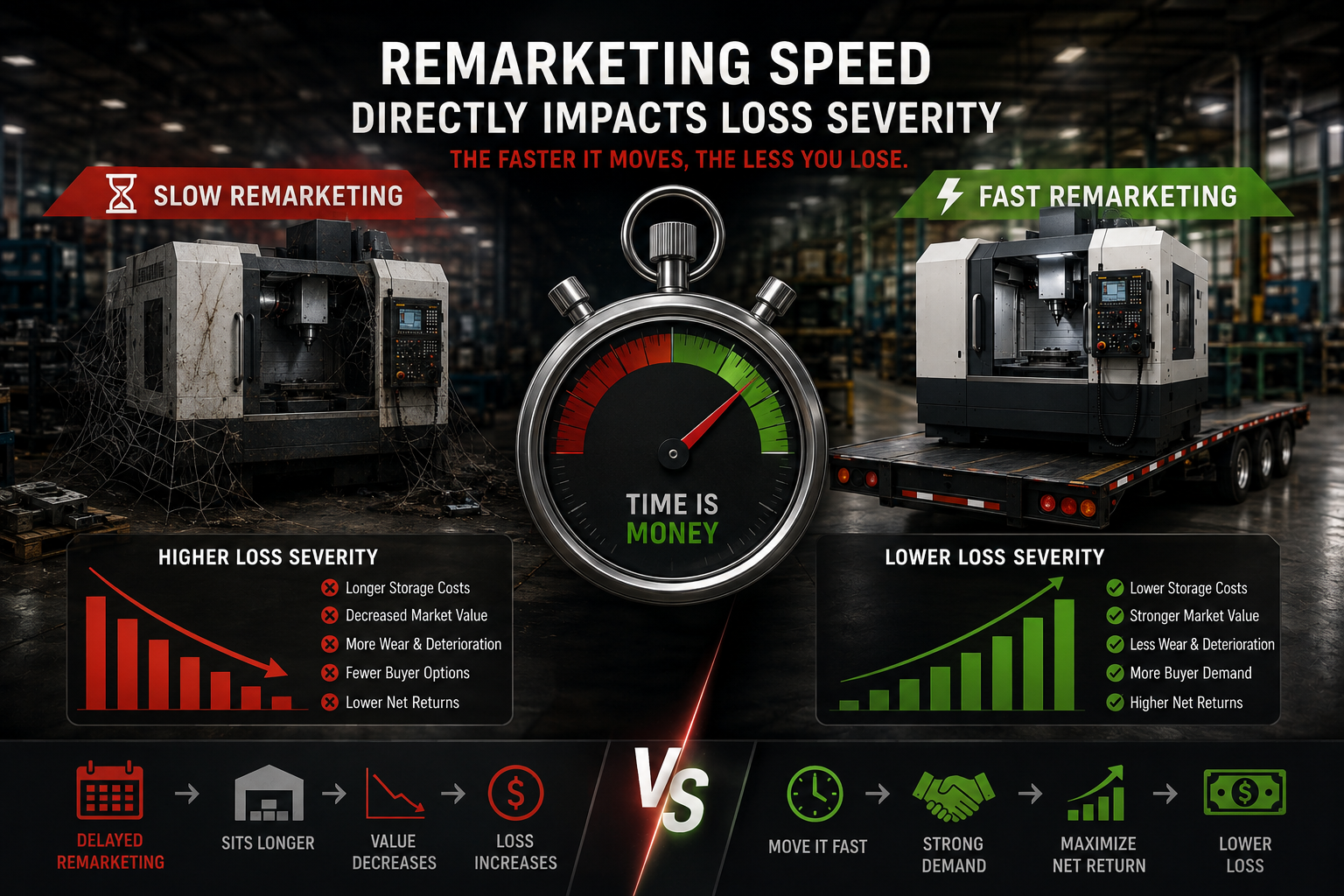
Loss severity and cycle time are tracked together in most special assets KPI frameworks, and that pairing isn't a coincidence. The longer repossessed equipment sits before it's remarketed, the more the eventual recovery tends to erode. This isn't just intuition, it's a handful of concrete cost and market dynamics working against the institution every additional week the equipment sits.
What Actually Happens While Equipment Sits
Storage isn't free, whether it's a fee paid to a third party or simply floor space and staff time the institution absorbs internally. That cost accrues the entire time the equipment isn't sold, and it comes directly out of eventual net proceeds. Beyond direct storage cost, industrial equipment sitting idle, especially outdoors or in uncontrolled conditions, is exposed to real wear, corrosion, and general deterioration that a buyer will discount for during inspection.
There's also a market timing dimension. Buyer demand for any specific type of equipment isn't constant, and a machine that could have moved quickly to an active buyer today may sit through a slower stretch of demand if remarketing is delayed. Every week of delay is a week of exposure to whatever the market happens to be doing, rather than capturing the buyer who's ready now.
Have equipment sitting that needs to move?
A fast, documented remarketing process built around this exact equipment category.
Talk to a Remarketing Partner →Where Delay Actually Costs Money
1. Direct storage and carrying costs
Whether paid externally or absorbed internally, storage cost accrues continuously and comes straight out of net proceeds. It's one of the more visible costs, but it's often underestimated when a disposition drags on longer than expected.
2. Physical deterioration
CNC equipment sitting idle, particularly outside of a controlled shop environment, is exposed to corrosion, dust intrusion, and general wear that reduces both its functional condition and how it presents to a buyer during inspection. A machine that would have shown well at repossession may show meaningfully worse a few months later.
3. Missed buyer timing
The pool of active buyers for a specific machine type at a specific moment isn't fixed. A qualified buyer actively looking today may have moved on to another purchase by the time a delayed disposition finally goes to market.
4. Compounding uncertainty in the file
A longer holding period before disposition can also complicate the disposition file itself, condition reports and valuations age, and the gap between "when this was assessed" and "when this actually sold" grows, which can weaken the file if the disposition is ever questioned.
Speed Without Cutting Corners
Moving faster doesn't mean skipping the steps that make a disposition defensible. It means compressing the time between them. A well run fast disposition still includes:
- A documented valuation, done promptly rather than delayed.
- Real marketing to qualified buyers, not a rushed sale to whoever's available first.
- Proper notice and process, timelines compressed by starting immediately, not by skipping steps.
The goal is removing unnecessary delay, the equipment sitting in queue, valuation work that could have started sooner, marketing that doesn't begin until weeks after repossession, not rushing the actual disposition process itself.
Where Time Typically Gets Lost
Between repossession and assignment to a remarketing partner
This gap is often the largest and most avoidable source of delay, equipment sitting while internal processes catch up.
Between assignment and valuation
A partner who can turn around a documented valuation quickly compresses this step meaningfully.
Between valuation and active marketing
Marketing that begins immediately, rather than waiting for additional internal approvals, captures more of the active buyer pool.
Between an offer and closing
A responsive process on both sides prevents a qualified buyer from losing interest or moving to another purchase.
FAQ
Is a faster sale always a lower price?
Not necessarily. Speed and price aren't inherently in conflict, a fast process that still includes real marketing to qualified buyers can produce strong recovery. The tradeoff mainly shows up when speed means skipping marketing entirely.
How much does storage time actually affect recovery?
It varies by equipment and market conditions, but storage cost, deterioration, and missed buyer timing all move in the same direction the longer equipment sits, which is why loss severity and cycle time are tracked together.
What's the biggest lever for reducing cycle time?
Closing the gap between repossession and assignment to a remarketing partner. That's often where the most avoidable delay accumulates.
Does moving fast create more compliance risk?
Not if the core steps, valuation, notice, and marketing, still happen properly. Speed comes from starting immediately and working efficiently, not from skipping requirements.
Don't let equipment sit longer than it needs to
A remarketing process built to move quickly without skipping the steps that make a disposition defensible.
Talk to a Remarketing Partner →