When a CNC equipment lease reaches end of term and the lessee doesn't renew, doesn't exercise a buyout option, or simply walks away, the leasing company is left holding a machine it now needs to remarket. Unlike a bank workout situation, this usually isn't a default, it's just a lease that ran its course. But the underlying challenge is similar, get the equipment moved efficiently while protecting recovery against the residual value on the books.
Why Off-Lease Equipment Is Its Own Situation
Off-lease CNC equipment carries a specific wrinkle most other remarketing situations don't, a booked residual value the leasing company is measuring recovery against, and often an ongoing relationship with the lessee that's worth preserving even as this particular piece of equipment moves on. A leasing company that handles this well protects both the recovery number and the customer relationship. One that handles it poorly can end up with underwater residuals and a former customer who doesn't come back for the next equipment need.
Have off-lease equipment that needs to move?
A remarketing process built to protect recovery and handle the equipment professionally.
Talk to a Remarketing Partner →The Process for Off-Lease Equipment
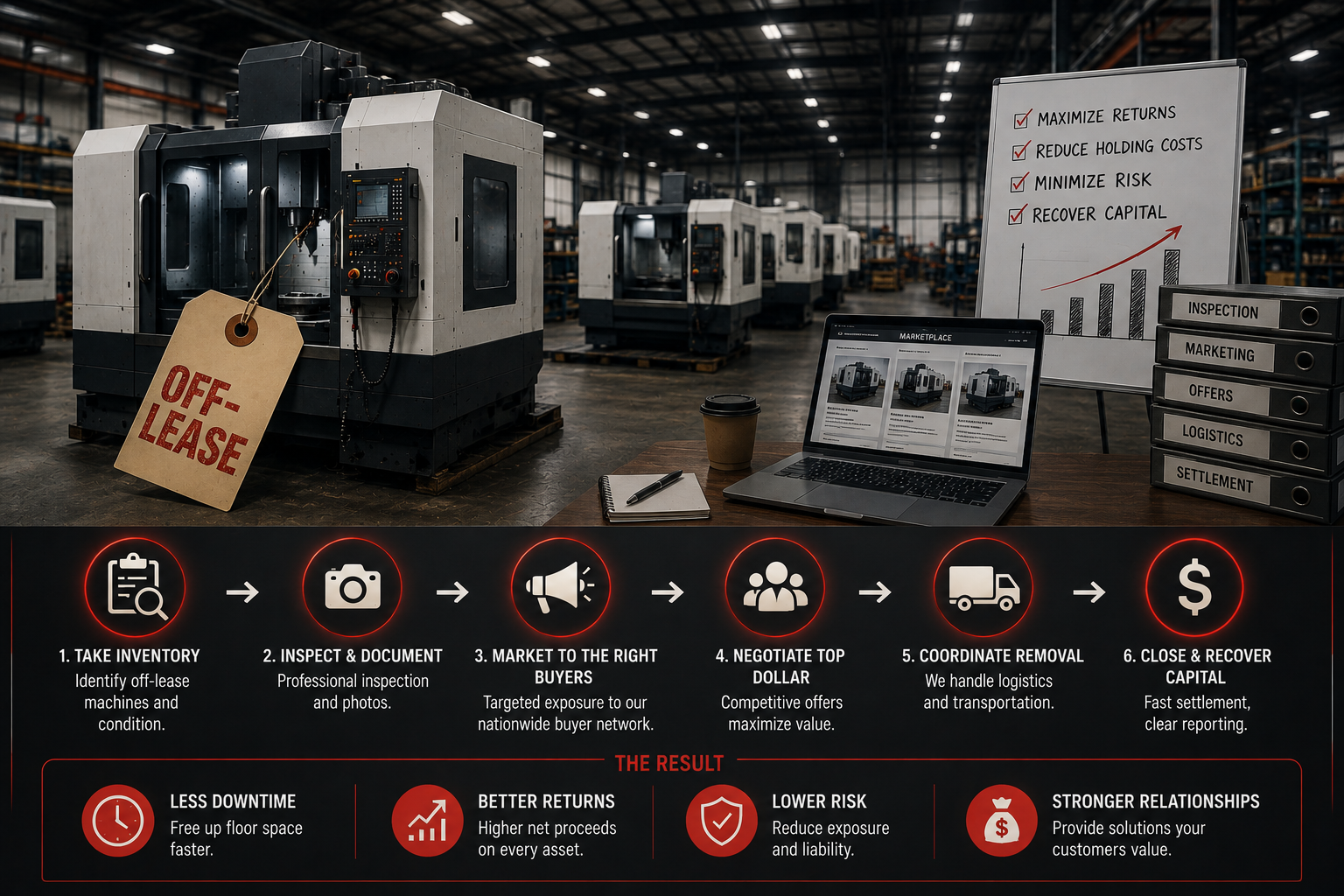
1. Take inventory
Identify the machines coming off lease and their current condition. This is the starting point for planning both timeline and expected recovery.
2. Inspect and document
A professional inspection with photographs establishes the actual condition against the booked residual, which matters for accurately forecasting recovery before marketing even begins.
3. Market to the right buyers
Off-lease CNC equipment benefits from the same targeted marketing that repossessed equipment does, exposure to a nationwide network of buyers who specifically deal in this equipment category, not just a generic listing.
4. Negotiate for the best return
Competitive offers from a genuinely qualified buyer pool matter more here than almost anywhere else, since recovery is measured directly against the residual value already on the books.
5. Coordinate removal
Rigging and transport handled professionally and efficiently frees up the lessee's floor space faster, which matters for the relationship even after the lease itself has ended.
6. Close and recover capital
Fast, clear settlement and reporting closes out the asset on the books and gets capital back into circulation for the next lease.
What This Protects
- Less downtime, freeing up the lessee's floor space faster, which reflects well on the leasing company even after the relationship on this specific asset has ended.
- Better returns, higher net proceeds on every asset relative to the booked residual.
- Lower risk, reduced exposure and liability the longer equipment sits unaddressed after lease end.
- Stronger relationships, a smooth, professional process is itself a solution the leasing company's customers notice and value.
Planning Around Lease End Dates
60 to 90 days before lease end
Confirm whether the lessee plans to renew, buy out, or return the equipment, so remarketing can be planned rather than reactive.
At lease end
Inspect and document condition immediately, before the equipment sits and before memory of its actual state fades.
Within the first few weeks
Begin active marketing to a qualified buyer network rather than letting the equipment sit while internal processes catch up.
At sale
Coordinate removal promptly and close out the file with clear settlement reporting.
FAQ
How is remarketing off-lease equipment different from a repossession?
The core disposition process is similar, valuation, marketing, sale, logistics, but off-lease situations typically aren't adversarial and often come with more advance notice, which allows for better planning.
What if the sale price comes in under the booked residual?
This happens and should be planned for with an accurate, documented valuation as early as possible, ideally before the lease even ends, so there are no surprises when the asset is remarketed.
Does the customer relationship really matter once the lease has ended?
Often yes, especially if the lessee may need equipment financing again in the future. A smooth, professional equipment transition reflects on the leasing company as much as the financing terms did.
Should remarketing start before or after the lease officially ends?
Planning should start well before end of term. Actual marketing can often begin as soon as it's confirmed the equipment is coming back, rather than waiting until it's physically returned.
Have off-lease CNC equipment coming back?
A remarketing process built around recovery and a professional experience for your customer.
Talk to a Remarketing Partner →