
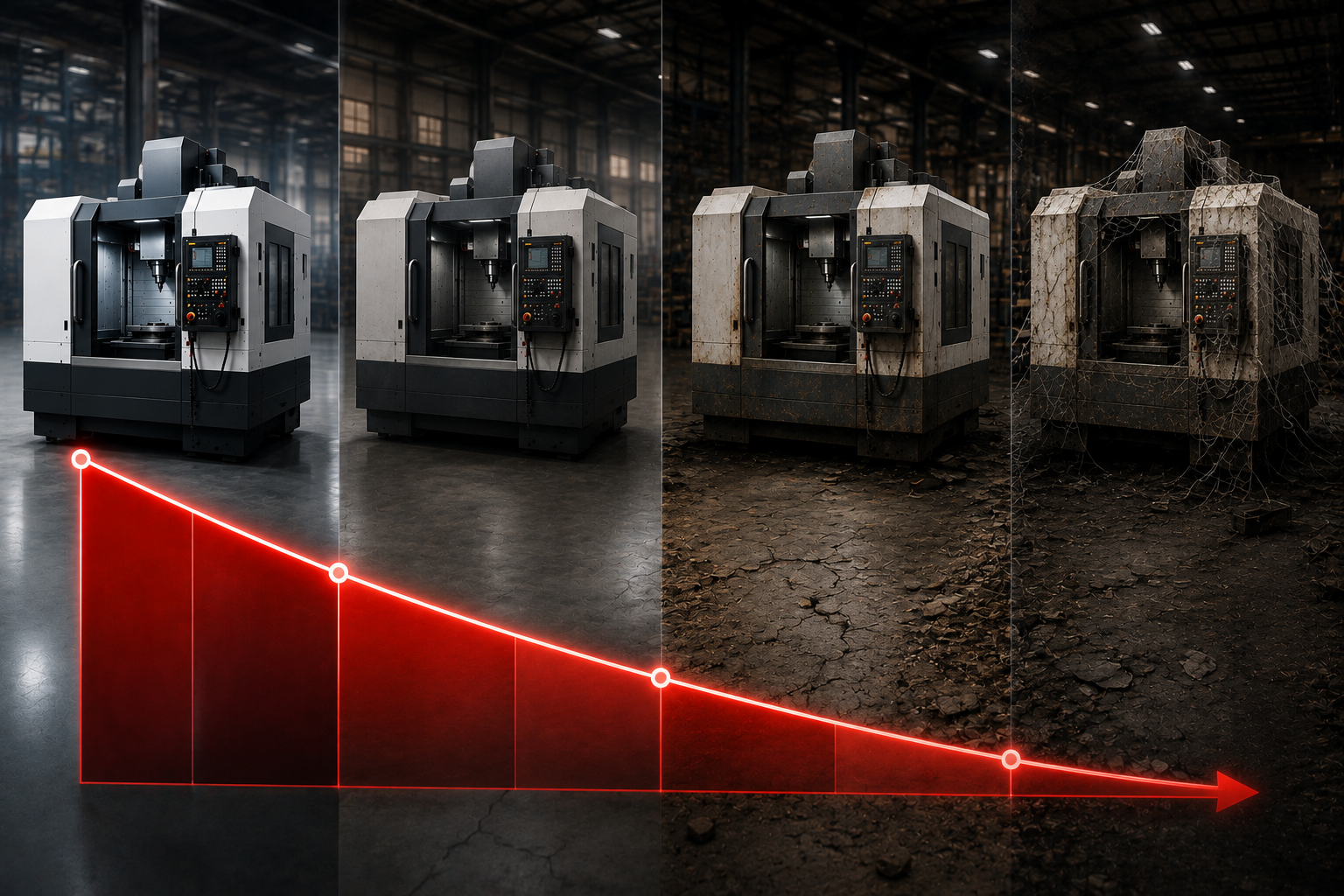
A CNC machine at the moment of repossession and the same machine sitting six months later are not really the same asset from a buyer's perspective, even if nothing has technically broken. Value erodes on more than one track at once, physical condition, market perception, and buyer availability, and it doesn't happen all at once. Here's roughly what changes, and when.
Value Decline Isn't Just Depreciation on a Schedule
Standard depreciation accounts for age and use, not for a machine sitting idle and unmaintained after repossession. That idle period introduces its own decline, separate from normal wear, driven by physical exposure, buyer perception, and the practical reality that a machine visibly sitting a long time raises questions for a buyer even when its mechanical condition is fine.
Have equipment that's already been sitting?
Get a real read on where it stands and what moving now versus later actually means for recovery.
Talk to a Remarketing Partner →A Rough Timeline of What Changes
At repossession
This is the baseline, the machine's true condition, before any additional idle time affects it. Condition reports and valuation done at this point reflect the equipment at its best available state post repossession.
The first month or two
Little has physically changed yet, but the clock on storage cost and buyer timing has already started. A machine that could have moved to an active, ready buyer in this window represents the best case scenario for both condition and market timing.
Roughly three to six months
Depending on storage conditions, this is where physical signs of neglect commonly start becoming visible, dust accumulation, surface corrosion on unprotected components, and general evidence the machine hasn't been maintained or run. Buyers doing an in person inspection will notice, and it affects both perceived value and negotiating leverage.
Six months and beyond
Extended idle time, particularly in uncontrolled storage conditions, can mean meaningful deterioration, more significant corrosion, potential issues with components that need periodic operation to stay in good working order, and a machine that increasingly reads to buyers as neglected rather than simply used. At this stage, a buyer may also factor in the unknown, what condition is the control system in, has anything seized up, which introduces additional pricing risk even if the underlying issues aren't severe.
Why This Matters for Valuation and Timing
A valuation done at repossession reflects the equipment at its best available condition. If disposition is delayed significantly, that original valuation may no longer reflect reality by the time the machine actually sells, which can create a gap in the file that's worth understanding and documenting, not just accepting.
- Re-inspect before finalizing a sale if significant time has passed since the original valuation.
- Document any changes in condition honestly, both to set accurate buyer expectations and to protect the disposition file.
- Weigh storage conditions, a climate controlled facility slows this decline meaningfully compared to an uncontrolled outdoor or unheated environment.
Protecting Value During Any Necessary Delay
Document condition immediately at repossession
This baseline matters regardless of how long disposition ultimately takes.
Store in the best available conditions
Climate controlled, secure storage meaningfully slows physical decline compared to an uncontrolled environment.
Move as soon as reasonably possible
As covered in our guide on reducing cycle time, most delay is avoidable, not inherent to the process.
Re-assess before sale if time has passed
An updated condition check protects both accurate pricing and the disposition file if the original valuation is no longer current.
FAQ
How quickly does a CNC machine actually lose value once repossessed?
It varies significantly by storage conditions and machine type, but buyer perception and market timing start working against the sale from the first weeks, well before serious physical deterioration sets in.
Does climate controlled storage meaningfully slow this decline?
Yes, protecting equipment from moisture, dust, and temperature swings significantly reduces the physical deterioration side of the equation, though it doesn't address market timing or storage cost.
Should a machine be re-valued if it sat for several months before disposition?
Generally yes. An outdated valuation that no longer reflects actual condition can both mislead pricing expectations and weaken the disposition file if questioned later.
Is it ever too late to get a reasonable recovery on equipment that sat too long?
Rarely truly too late, but recovery expectations should be adjusted honestly based on actual current condition rather than the original valuation from repossession.
Not sure where a piece of equipment stands after sitting a while?
Get an honest, current read on condition and value before deciding next steps.
Talk to a Remarketing Partner →