
Some institutions see machine tool collateral once and never again. Others see it a few times a year, steadily, not enough to build dedicated internal expertise, but enough that starting the vendor process from zero every single time is a real waste of effort. For that second group, a standing remarketing relationship, established once and ready whenever the next machine comes back, solves a problem that a one-off vendor search doesn't.
Why Recurring Repossessions Need a Different Approach
A single, one-off equipment repossession justifies a full vendor search each time. Recurring volume doesn't. Re-running the same vendor evaluation, the same TPRM review, the same negotiation over terms, for every individual machine adds real, avoidable delay and administrative burden. A standing relationship front-loads all of that work once, so each new repossession starts from an already-cleared, already-understood process instead of square one.
See machine tool collateral more than once a year?
Set up a standing relationship once, so every future repossession moves faster from day one.
Talk to a Remarketing Partner →What a Standing Relationship Actually Includes
1. Vendor terms agreed once, not renegotiated each time
Fee structure, reporting expectations, and general process terms settled up front mean each new machine doesn't require a fresh negotiation before work can even start.
2. TPRM review completed once
Once a vendor clears third-party risk review, that clearance carries forward to future dispositions rather than restarting the review process for every individual transaction.
3. A standardized intake process
A consistent format for reporting a new repossession, condition, location, documentation, means the partner can begin work immediately without a new process being defined each time.
4. A known turnaround expectation
With the relationship already established, both sides know roughly what a valuation and disposition timeline looks like, rather than each new machine being its own uncertain estimate.
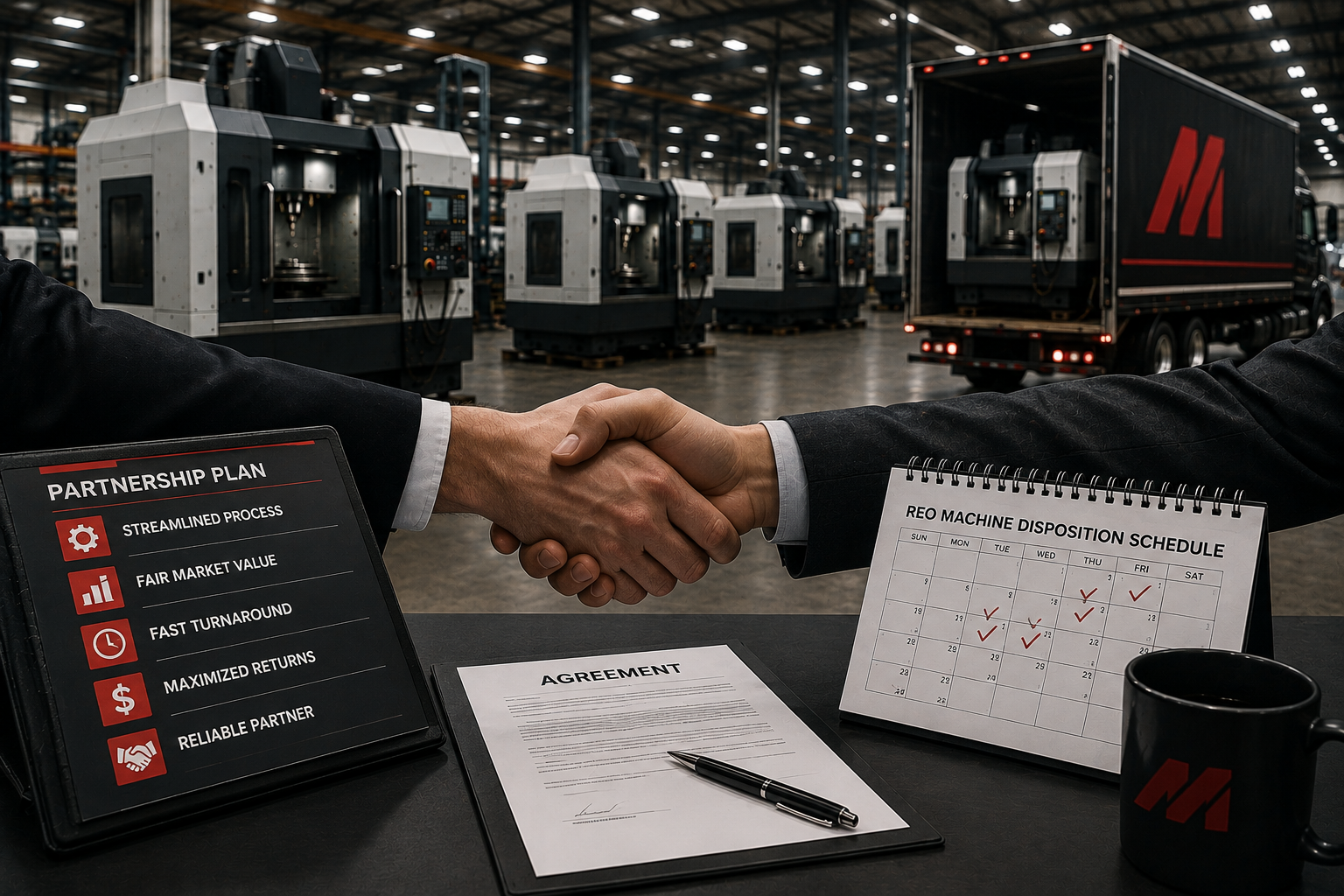
What This Actually Saves
- Time, no repeated vendor search or negotiation for each new machine.
- Compliance effort, TPRM review handled once rather than per transaction.
- Consistency, the same documentation standard and process applied to every disposition.
- Faster response, an established relationship starts working the moment a new repossession happens, not after a vendor evaluation cycle.
Setting One Up
Evaluate a partner the way you would for a single transaction
The vetting still matters, it just happens once instead of repeatedly.
Complete TPRM review
Clearing this up front is what allows future dispositions to move without a repeat review.
Agree on terms and process
Fee structure, reporting cadence, and intake format settled as a standing agreement.
Use it going forward
Each new repossession simply enters the established process rather than starting a new vendor search.
FAQ
How much recurring volume justifies a standing relationship?
There's no fixed threshold, but if machine tool collateral comes back with any regularity, even a few times a year, the time saved on repeated vendor searches tends to add up quickly.
Does a standing relationship mean using the same partner for every disposition regardless of fit?
Not necessarily. It means having an established, ready relationship as the default, while still evaluating whether a specific situation calls for something different.
Does this replace the need for TPRM review on future transactions?
The initial review still needs to happen, but a standing relationship means it doesn't need to be repeated for every individual machine once the vendor is cleared, subject to your institution's own periodic reassessment policy.
What if repossession volume is unpredictable?
A standing relationship still helps, since the value comes from having the process and terms already established, ready whenever the next repossession happens, rather than from a fixed cadence.
Set up a relationship that's ready before the next machine comes back
One evaluation, one TPRM review, then a process that's ready whenever you need it.
Talk to a Remarketing Partner →